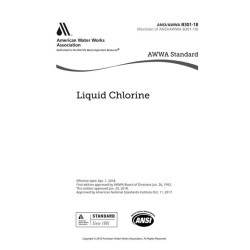
ANSI/AWWA B301 sets the minimum requirements for liquid chlorine used in potable water, wastewater, and reclaimed water treatment. It covers physical and chemical properties, sampling, testing, packaging, and shipping, and can be referenced in purchasing documents or used to test delivered chlorine. Chlorine is the oxidizing agent most widely used for disinfecting water supplies; the first full-scale use of liquid chlorine for water disinfection was in 1912 at Niagara Falls, N.Y., where it helped end recurring typhoid outbreaks. Utilities also use chlorine for prechlorination to reduce color, taste, and odor, and to oxidize metallic substances so they can be removed by filtration.